Improving emotional intelligence is possible because emotional skills are shaped by habits, awareness, and experience. Small daily practices can strengthen self-control, empathy, communication, and emotional understanding over time.
Many people assume emotional intelligence is something you either have or do not have. If you struggle with frustration, misunderstandings, difficult conversations, or emotional reactions, it can feel like part of your personality rather than a skill.
I think this belief causes people to give up too early. Emotional intelligence is not simply a fixed trait. Like many human abilities, it can develop through practice. The encouraging part is that improvement does not require dramatic changes. It usually begins with paying closer attention to emotions and responding to them differently.
The goal is not to become emotionally perfect. The goal is to become more aware, more intentional, and more effective in situations where emotions influence behavior.
Takeaways
- Emotional intelligence can improve because emotional habits can be learned and reshaped.
- Self-awareness is the foundation of emotional growth because emotions must be recognized before they can be managed.
- Self-control involves responding thoughtfully rather than reacting automatically.
- Empathy grows through observation, listening, and perspective-taking.
- Small daily practices often produce greater progress than occasional major efforts.
Is Emotional Intelligence Fixed or Changeable?
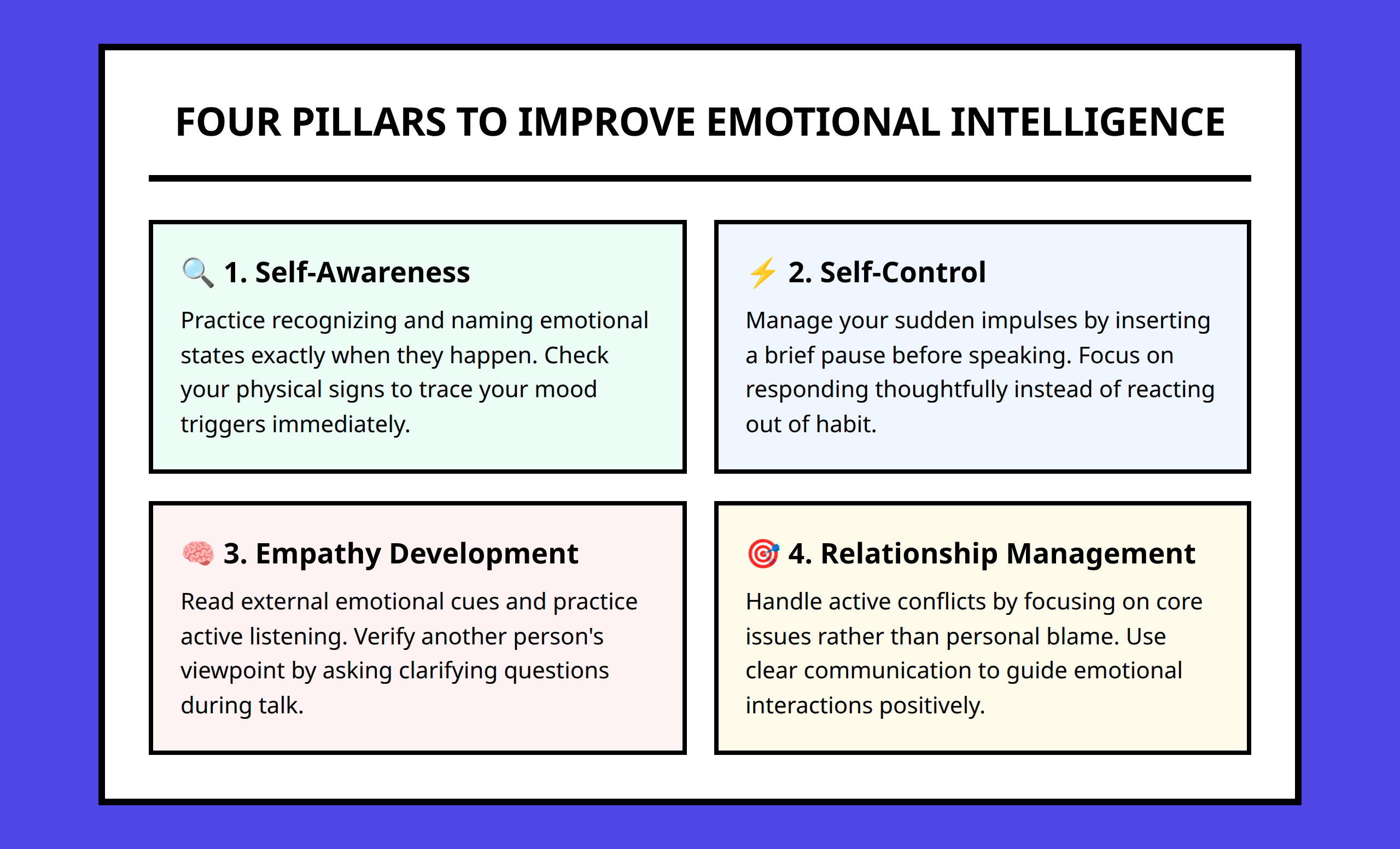
Emotional intelligence is changeable because emotional behavior is influenced by learned patterns and habits.
People often develop emotional responses through repeated experiences. Over time, certain reactions become automatic. The good news is that habits can change when they are recognized and practiced differently.
This does not mean transformation happens overnight. Emotional growth usually occurs gradually. Just as physical fitness improves through repeated exercise, emotional skills improve through repeated use.
An encouraging way to think about emotional intelligence is that every difficult interaction can become practice. A disagreement, a stressful meeting, or a frustrating delay may feel inconvenient, but each situation provides an opportunity to strengthen emotional skills.
Building Self-Awareness
Self-awareness is the most important starting point because emotions cannot be managed effectively if they are not recognized.
Many emotional reactions happen so quickly that people notice only their behavior and not the feeling that triggered it. Developing awareness means learning to identify emotions before they fully take control.
Recognize Emotional States
Instead of saying, “I feel bad,” try identifying the emotion more precisely. Are you frustrated, disappointed, anxious, embarrassed, overwhelmed, or angry?
Specific awareness often creates greater control because it turns a vague emotional experience into something that can be understood.
Notice Emotional Triggers
Pay attention to situations that repeatedly create strong reactions. Patterns often reveal valuable information about personal sensitivities, expectations, and concerns.
Use Reflection
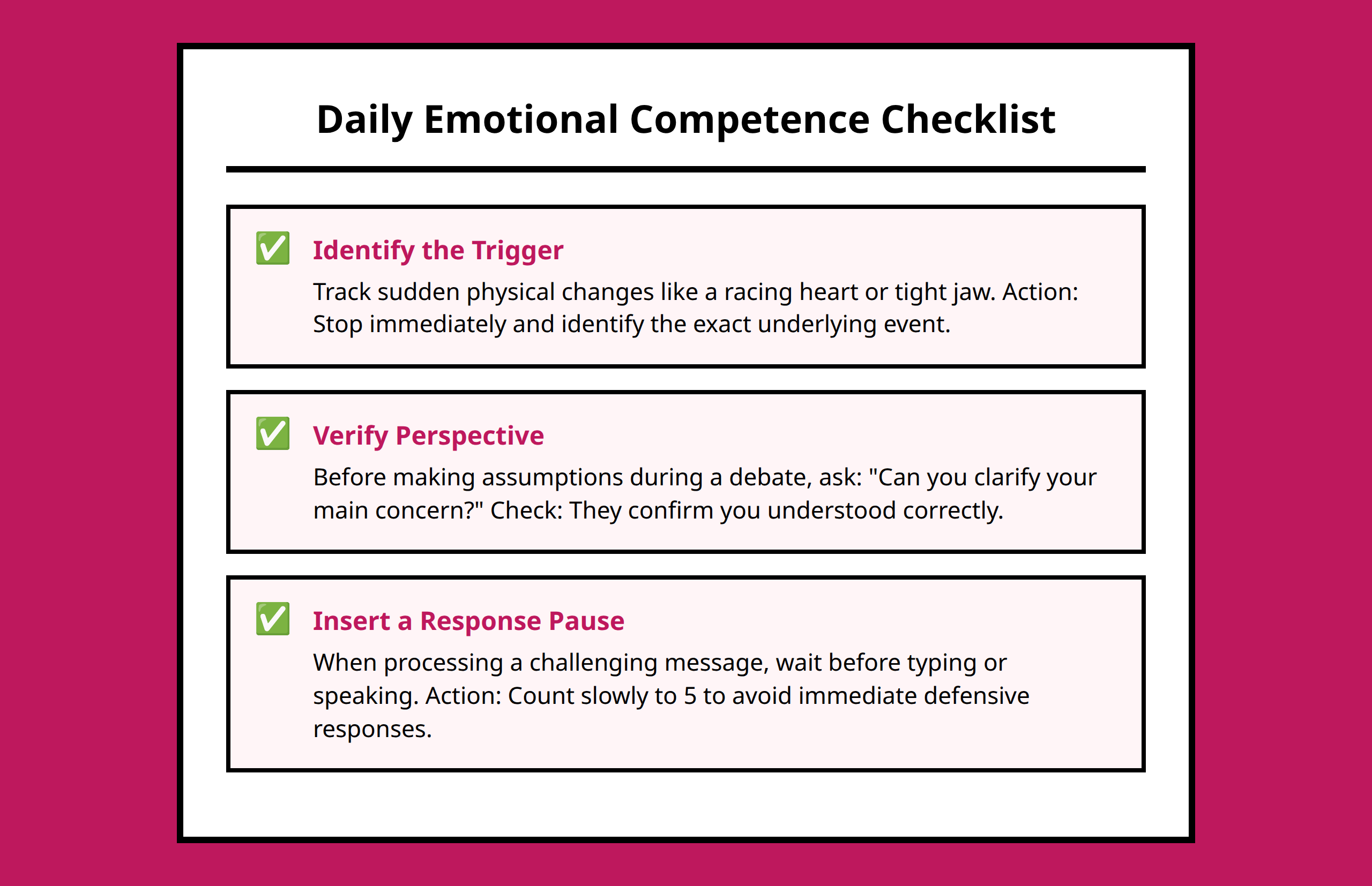
A simple daily reflection can be powerful. Ask yourself:
- What emotion did I experience most strongly today?
- What triggered it?
- How did I respond?
- Would I respond differently next time?
These questions help transform emotional experiences into learning opportunities.
Strengthening Self-Control
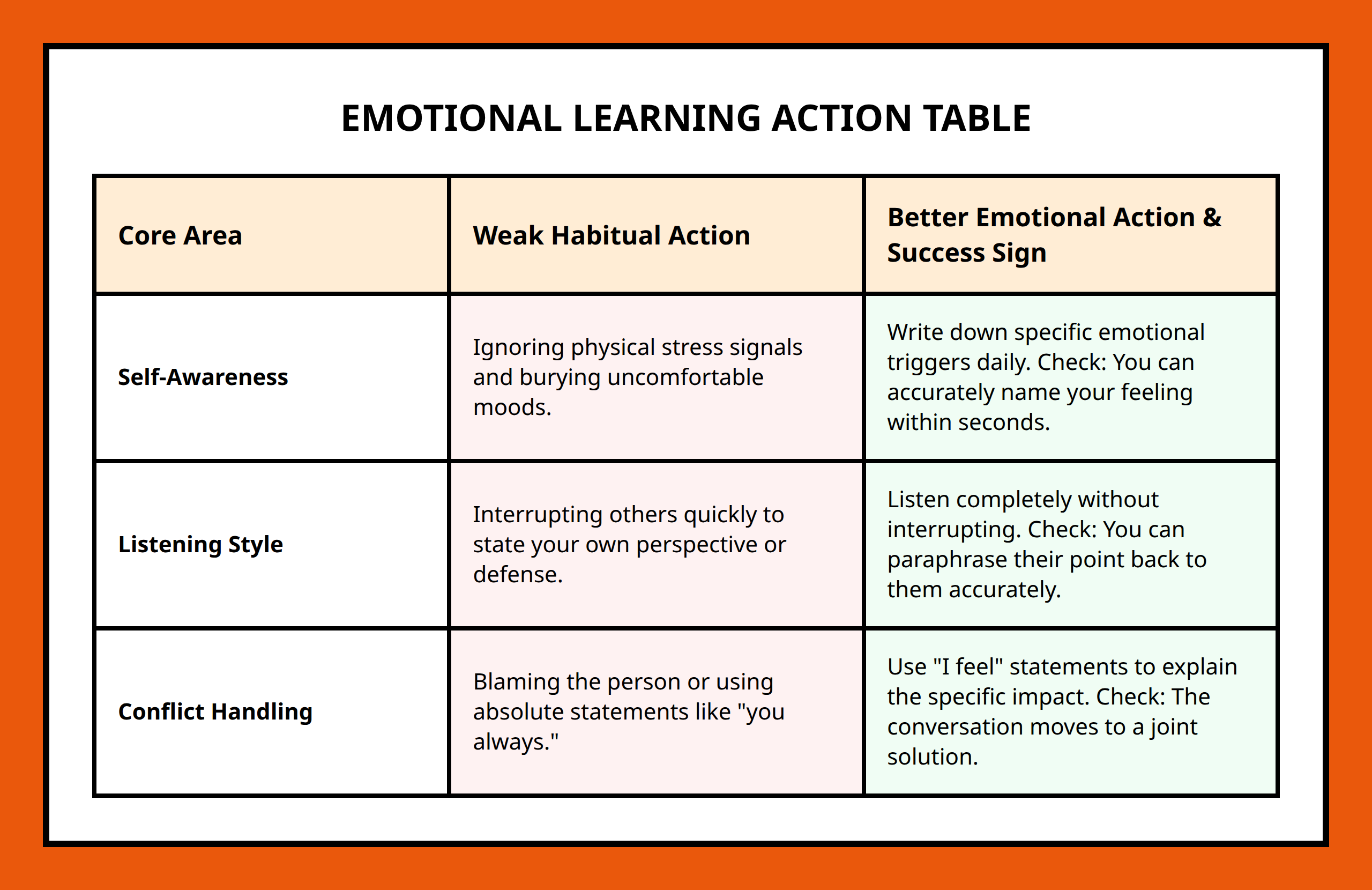
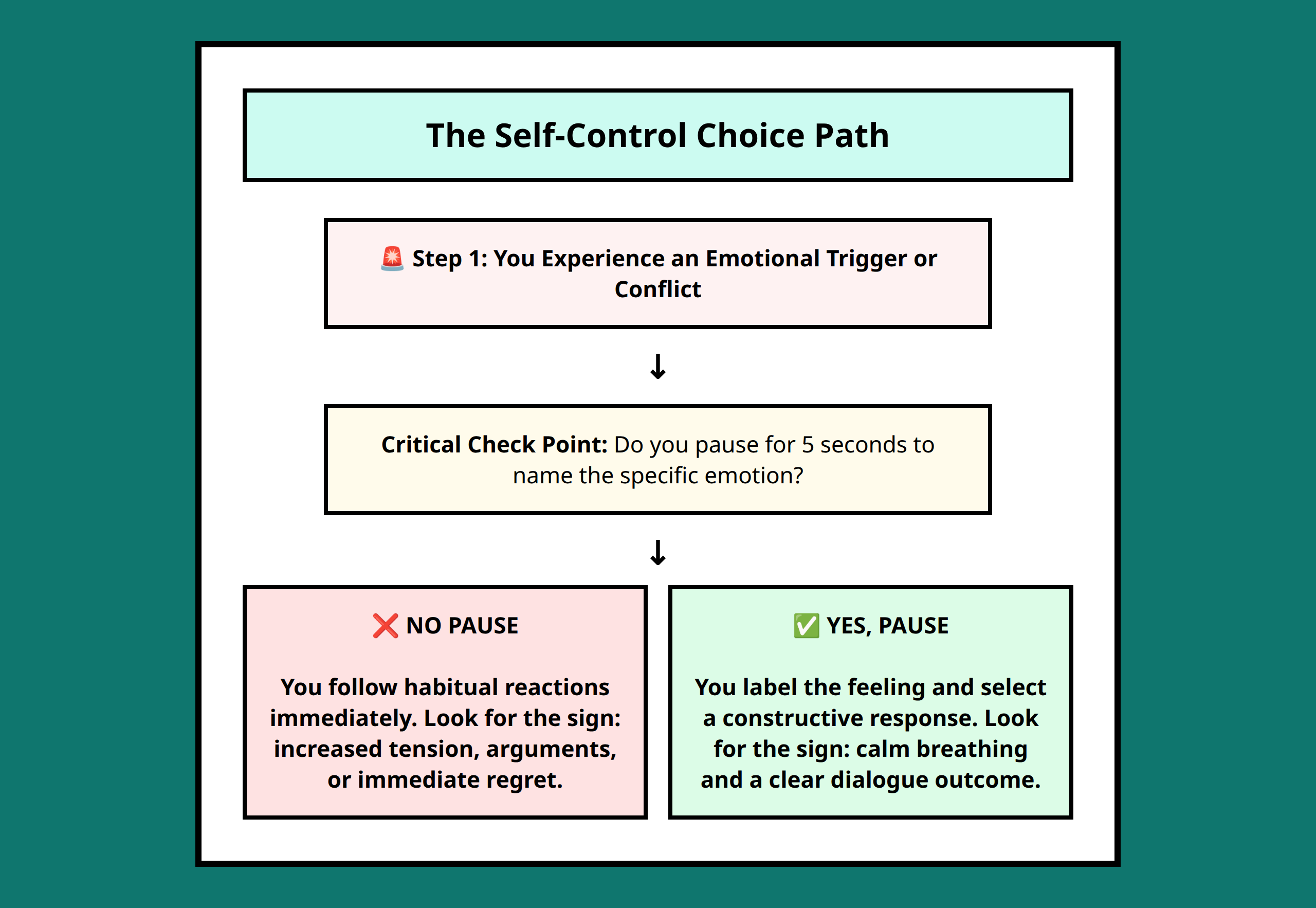
Self-control is the ability to manage emotional impulses without ignoring emotions entirely.
Many people misunderstand emotional control as suppression. In reality, emotional intelligence involves recognizing feelings while choosing a constructive response.
Respond Instead of React
One of the most useful emotional skills is creating a pause between feeling and action.
For example, imagine receiving a message that feels critical or unfair. An immediate response might escalate the situation. Taking a brief pause creates room for reflection before acting.
Slow Down Strong Emotions
When emotions become intense, slowing down is often more helpful than trying to eliminate the feeling.
Pausing, taking a walk, or delaying a response can reduce impulsive behavior while preserving the valuable information the emotion may contain.
Practice Consistency
Self-control develops through repetition. Small moments of restraint repeated regularly often have a larger long-term effect than occasional dramatic displays of discipline.
Developing Empathy and Social Understanding
Empathy is the ability to recognize and understand another person’s emotional experience.
Strong empathy does not require agreement. It requires understanding.
Read Emotional Cues
People communicate emotions through tone of voice, facial expressions, body language, and word choice. Paying closer attention to these signals improves social understanding.
Practice Perspective-Taking
When disagreements occur, ask a simple question: “How might this situation look from the other person’s perspective?”
This question often reveals information that emotional reactions initially hide.
Listen to Understand
Many conversations involve listening for a chance to respond. Empathy improves when listening becomes an effort to understand what the other person is actually experiencing.
Even brief moments of genuine understanding can improve trust and communication.
Improving Relationship Management
Relationship management is where emotional intelligence becomes visible to other people.
Self-awareness and empathy are important, but they ultimately influence behavior through communication and interaction.
Communicate Clearly
People with stronger emotional intelligence often express concerns directly without unnecessary hostility or avoidance.
Clear communication reduces confusion and prevents emotional misunderstandings from growing larger.
Handle Conflict Constructively
Conflict is unavoidable. Emotional intelligence helps people focus on solving the problem rather than attacking the person.
This distinction often determines whether disagreement damages or strengthens a relationship.
Use Emotional Influence Responsibly
Every interaction affects emotions. Encouragement, patience, respect, and understanding can positively influence others while strengthening relationships over time.
Common Obstacles to Emotional Growth
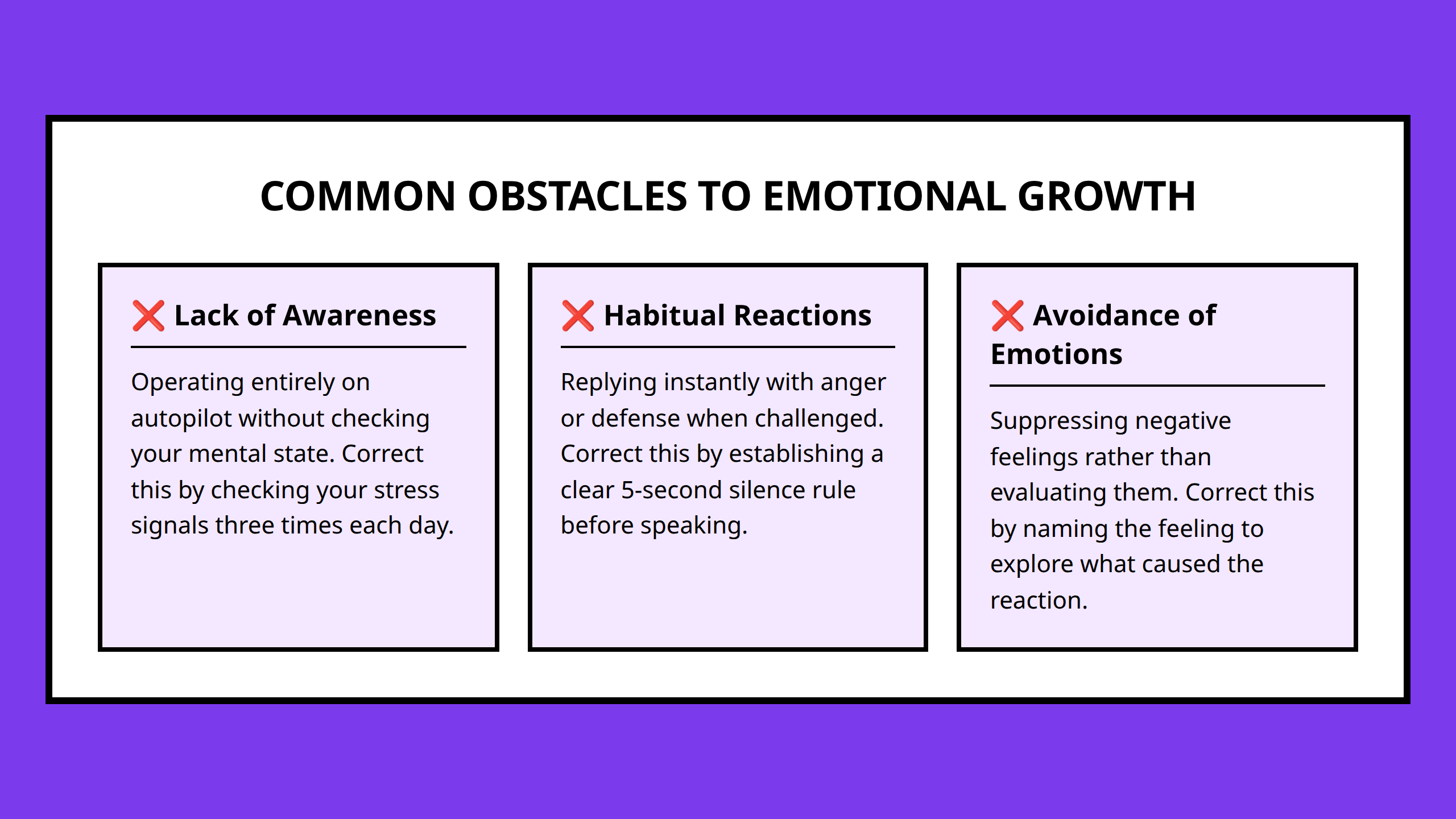
Most emotional growth challenges come from habits rather than a lack of potential.
Lack of Awareness
People cannot improve emotions they never notice. Growth begins with paying attention.
Automatic Reactions
Long-standing habits can make certain responses feel unavoidable. Recognizing these patterns is often the first step toward changing them.
Avoiding Emotions
Some people try to ignore uncomfortable emotions completely. Unfortunately, ignored emotions often continue influencing behavior without being understood.
Emotional intelligence grows when emotions are acknowledged, examined, and managed rather than denied.
FAQ
Many people look for advanced techniques when trying to improve emotional intelligence. In practice, progress often comes from simple habits repeated consistently: noticing emotions, pausing before reacting, listening more carefully, and reflecting on interactions afterward.
If you want one practical next step, spend the next week identifying and naming your strongest emotion each day. That small habit can create the awareness needed for every other emotional skill to grow.
- Emotional Intelligence: The ability to understand, manage, and use emotions effectively in yourself and your relationships.
- Self-Awareness: The ability to recognize and understand your own emotions as they occur.
- Empathy: The ability to understand another person’s feelings and perspective.
- Self-Control: Managing emotional impulses and choosing thoughtful responses instead of automatic reactions.
- Relationship Management: Using emotional understanding to communicate effectively, resolve conflicts, and maintain healthy relationships.
